
College enrolls record number of high school students
By Corban Stanton
Copy Editor
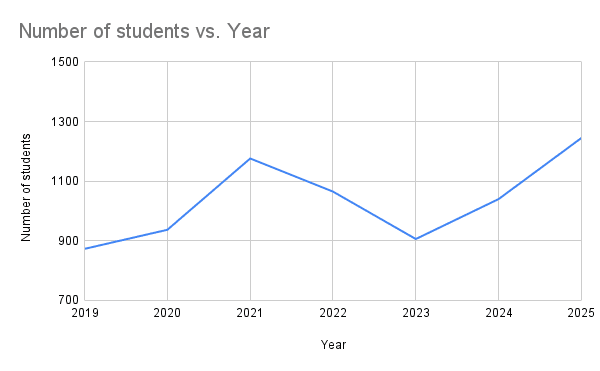
The number of early college students has reached an all-time high at Clackamas Community College, with 1,245 enrolled high schoolers taking classes at CCC this school year, according to college officials.
This comes at the same time as Writing 121 classes, the intro level writing course, has reached its highest class count yet at 30. To give some comparison another required entry level class, public speaking, only has 16 sections.
Graph by Corban Stanton
In 2005, Oregon’s senate passed Bill 300, which allowed students 16 years or older in their junior or senior year to attend community college. This opened the flood gates for high schoolers with extra drive to get both a high school diploma and start on an associates degree.
It was not just a free-for-all though; students had to get permission from a counselor to show that they wanted to pursue higher education. Advisers were trying to filter out the students that are not mature or ready for the college experience.
Abbigail Brand, a second year early college student had this to say on the opportunity, “It’s been such a good experience overall. I like that I’m able to take college classes and work toward my degree while still being in high school. It makes me feel like I’m actually doing something to prepare for my future instead of just waiting for it to happen. It’s a lot of responsibility, but it’s also super rewarding when I see how far I’ve already come.”
Regulations have changed since 2005, and this has likely played a part in the increase in numbers. Early college students at CCC no longer have to seek permission from instructors before being enrolled, and can be as young as 14.
“Going back to pre-COVID and going forward from there it [student body size] increased dramatically during COVID,” said Tina Tewes, CCC’s high school connections adviser.
“Then it started to drop down, mainly we found because students were not as happy taking classes online, and so they kind of pulled back from our early college program so our numbers went down. But they have in the last three years started increasing again and so we are, as of the 24-25 school year, we are just a little more than our highest numbers ever,” said Tewes.
“The fact that we have got high school aged students that are capable of taking college level classes and doing well I think is a boon for the college, a boon for the instructors and for their classmates because you know in community college you are going to meet a variety of people over time,” said Tewes.
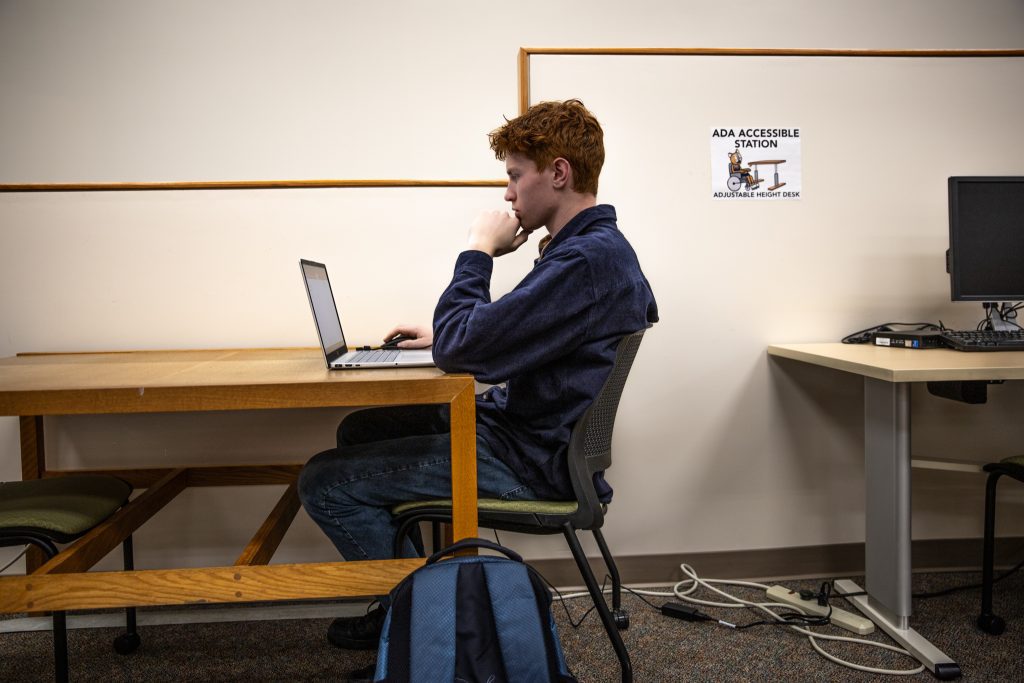
Early college student Conan Wynn works in the library. Photo by Corban Stanton
College students that actually have to be in the classroom have a different experience with high schoolers.
“I think it is a really awesome opportunity,” said Analee Peters, a college sophomore. “I myself did dual credit through PCC [Portland Community College] when I was a junior, so I think it is a really cool thing to do. And I mean I haven’t really witnessed any crazy things happen, so I think you know if kids are here and they are here to learn, they are doing what they need to do for that.”
Still another viewpoint, Matthew Schumacher, a writing instructor, has had some small problems with early college students in the past, but otherwise has been incredibly pleased with the younger students.
“The early college students have generally been a nice surprise. On occasion, of course, the surprise is not as satisfactory in terms of preparedness and/or maturity, but I have had at least two early college students in particular recently who were the very best writers in the class,” said Schumacher.
Another writing instructor, Sean Warren, expressed a similar sentiment.
One often overlooked advantage of the program is funding. High schoolers themselves don’t pay for classes, but the state does. High school students do not need financial aid, they get funds through the school and pay full price, meaning the college makes money.
The numbers don’t show any sign of decreasing either. In the past two years the amount of early college students has increased by just a little over 300 from the 906 students in 2023.
“I think that’s awesome! It shows that more students are recognizing how valuable this opportunity is. It also means people are starting to take alternative paths to reach their goals instead of waiting until after high school to start.” said Brand in reference to the heightened numbers, “It’s exciting to be part of that growth and see how much the program has expanded.”
